Indoor vs Outdoor LED Displays: brightness, IP rating and what actually matters
Indoor screens run at 1500 nits and IP31; outdoor screens need 5000+ nits and IP65. Here is how brightness, IP rating, refresh rate and viewing distance decide which one you need.
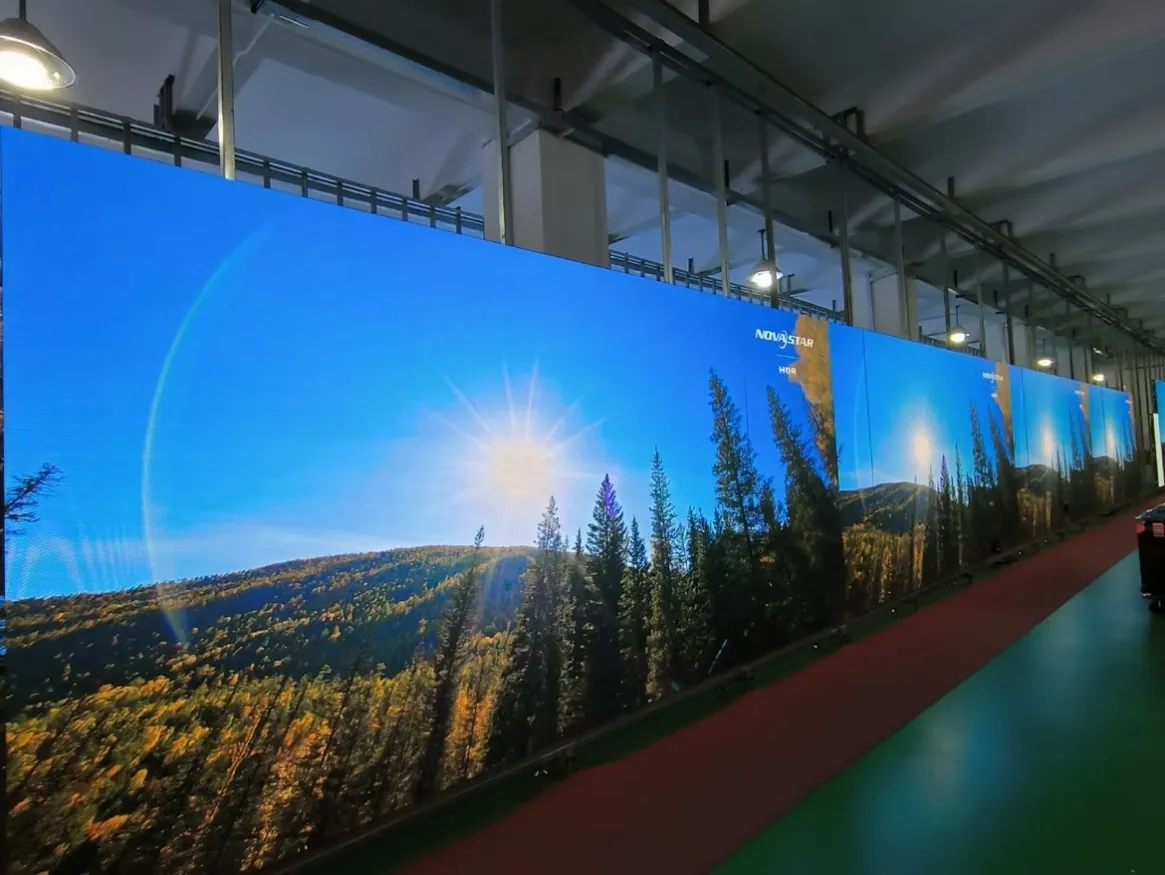
Choosing between an indoor and an outdoor LED display is not about which one is better. It is about where the screen will live, how far away people will stand, and how much light it has to fight. Get those three things right and the rest of the specification falls into place.
Brightness: 1500 nits indoors, 5000+ nits outdoors
Brightness is measured in nits (cd/m²). A typical indoor LED display, such as our P2.5 indoor model, runs at 1500 nits — more than enough in a mall, showroom, conference room or church, where the lighting is controlled. Put that same screen outside and it would wash out in sunlight. Outdoor screens need 5000 nits or more: our P6 outdoor display runs at 5000 nits, while the P4.81, P5 and P10 outdoor models run at 5000 to 7000 nits. That is the first number to check, and the easiest way to tell whether a screen is really built for outdoors.
IP rating: what the weather will do to your screen
The IP rating tells you how well a cabinet keeps out dust and water. Indoor cabinets are usually IP31 — protected against solid objects and dripping water, which is all a climate-controlled room needs. Outdoor cabinets need IP65 or IP67: our P5 outdoor display is IP65, and the P4.81, P6 and P10 outdoor models are IP67, sealed against rain and dust. An indoor screen used outdoors will fail quickly; an outdoor screen used indoors is overbuilt, heavier and more expensive than you need.
Refresh rate and image quality
Refresh rate matters most when the screen will be filmed — at events, in churches with live streaming, or on broadcast. A refresh rate of 7680Hz, as on our P3.91 rental, P3.91-7.82 transparent and P6 models, keeps video flicker-free on camera. Lower refresh rates can look fine to the eye but show banding on video. If your screen will appear on camera, ask for the refresh rate before you buy.
Viewing distance and pixel pitch
Pixel pitch — the distance between LED pixels — decides how close people can stand. A P2.5 indoor wall looks sharp from about 2.5 metres; a P10 outdoor billboard is designed for 10 metres and beyond. Indoors you need fine pitch; outdoors you need brightness and weatherproofing more than fine pitch. Our indoor range runs from P2.5 to P3.91; our outdoor range runs from P4.81 to P10.
What actually matters when you buy
Start with the location: indoors or outdoors, and the nearest viewing distance. Then check brightness, IP rating and refresh rate against that use — not against a generic best specification. Then check the supplier: XINLED has built LED displays since 2012 in a 5,000 m² factory in Shenzhen, producing 2,000 m² a month. Every screen runs a 72-hour ageing test before shipping, carries CE, RoHS and FCC certification, and ships in 7–10 days with a 3-year warranty. A screen is only as good as the factory and the testing behind it.
Still unsure? Send us your wall size, location and viewing distance and our sales engineers will recommend the right model.